
Lawn Care Montgomery, Alabama — Bermuda, Zoysia & Centipede Specialists
We treat the lawns the national chains get wrong. Red clay soil, Zone 8a heat, brown patch season starting in May — your Montgomery yard needs someone who actually knows this market.
After every service — see how our process works — we leave a door hanger noting what was applied, what to watch for, and when we’re coming back. You never wonder if we came. You always know what happened to your yard.
Your Yard Has Problems Most Companies Don’t Know How to Fix
Every week, customers in East Montgomery, Pike Road, Dalraida, and Prattville tell us the same things:
- 😠“The last company didn’t show up half the time.”
- 🔻“My Bermuda turned brown in June and they just said water it more.”
- 💰“I paid for a treatment programme and my yard looks the same.”
- 🔄“I’ve been through four companies in three years.”
Those problems happen when a lawn company doesn’t understand Montgomery’s red clay soil — proper weed control timing, Zone 8a timing, and the difference between Bermuda, Zoysia, and Centipede care.
Red Clay Compacts Hard
East Montgomery, Pike Road, and Eastchase sit on red clay — core aeration fixes this. Fertilizer runs off instead of absorbing. Core aeration breaks the cycle — most companies skip it.
Brown Patch Hits in May, Not July
Rhizoctonia solani activates when Montgomery nights stay above 60°F. That’s mid-May here. Treating it reactively in July means it’s already spread across your lawn.
Centipede Needs Less, Not More
What works on Bermuda in Eastchase will damage Centipede in Hope Hull. Over-fertilization is the #1 cause of Centipede decline in Montgomery — entirely preventable.
Why Local Lawn Knowledge Matters
Not all lawn care is equal. A company that understands Montgomery’s specific soils, grasses, and seasonal patterns delivers better results every single time.
Lawn Care Services in Montgomery, AL
 Montgomery, AL
Lawn Mowing
Weekly and biweekly mowing at the correct height — 1.5–2” Bermuda, 1.5–2.5” Zoysia, 3–4” St. Augustine. Every visit includes edging, trimming, and blowing clean.
Learn more →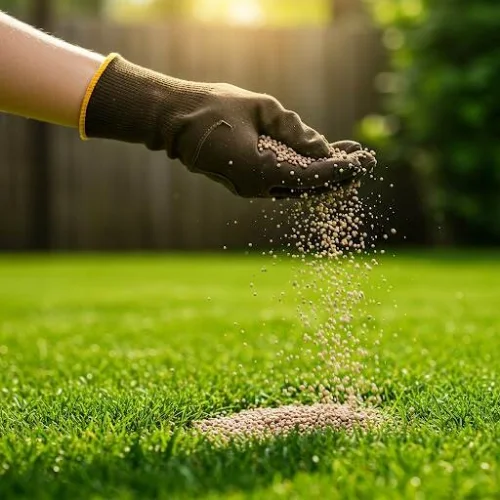 Montgomery, AL
Lawn Treatment Programme
Our 6-step annual programme timed to Zone 8a: pre-emergent, spring boost, fertilization, summer feeding, pest monitoring, and winter hardening — not a national template.
Learn more →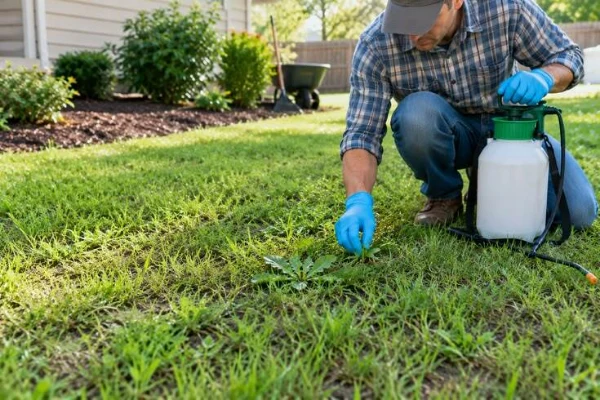 Montgomery, AL
Weed Control
Pre-emergent in late February to mid-March — the window most companies miss — plus post-emergent for crabgrass, dollar weed, dallisgrass, and Poa annua.
Learn more →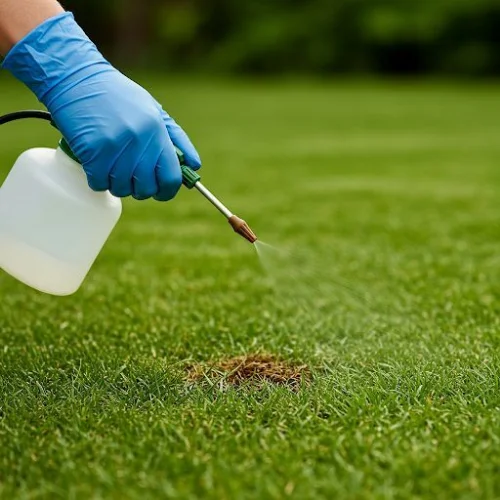 Montgomery, AL
Lawn Fertilization
Zone 8a warm-season fertilization from May through August, calibrated to your grass type. Over-fertilizing centipede is the most common mistake we correct in Montgomery yards.
Learn more →Lawn Disease Control
Preventive fungicide starting mid-May. Brown patch, spring dead spot, chinch bugs, and armyworms
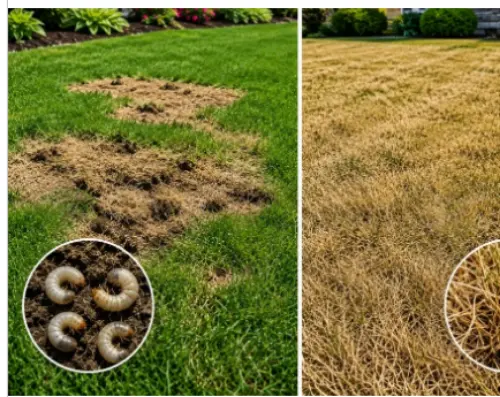 Montgomery, AL
 Montgomery, AL
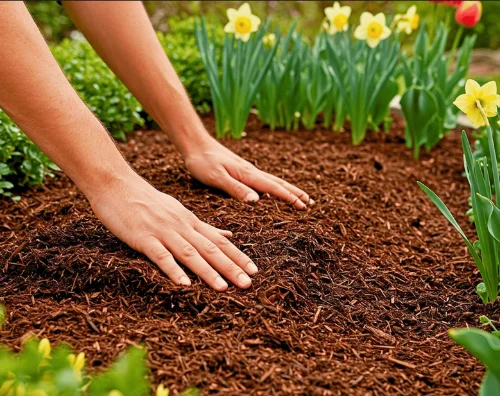
Landscaping & Mulch
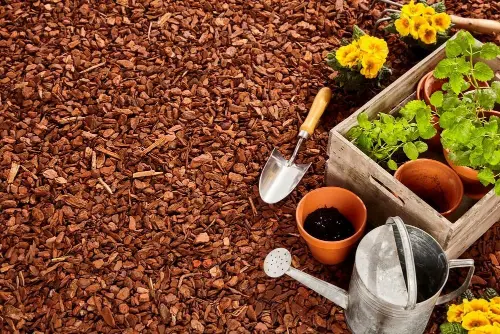
Flower bed design, mulch installation, and residential landscaping. Plants selected for Zone 8a and your specific soil profile — red clay in Eastchase vs. alkaline in Hope Hull.
Learn more →Not sure what your yard needs? We’ll come out, walk your property, and give you an honest assessment — free, no pressure.
Montgomery Grass Types Need Different Care
The wrong treatment on the wrong grass causes more damage than doing nothing. We identify yours first.
- Fertilize between May and August when actively growing — not before green-up
- Weekly mowing at 1.5–2″ prevents scalping and disease entry
- Summer stress from heat and drought is managed with proper soil moisture, not extra nitrogen
- Pre-emergent applied in late February before soil hits 55°F
- Denser turf requires sharp mowing blades to prevent tearing and browning
- Shade tolerance is moderate — thin coverage in deep shade needs remediation
- Susceptible to large patch disease in fall — preventive fungicide in September
- Slower recovery from damage; avoid over-traffic during stress periods
- Requires significantly less nitrogen than Bermuda — over-fertilization causes decline
- Thrives on slightly acidic soil; high pH causes iron deficiency and yellowing
- One to two light applications per year are all that is needed for a healthy stand
- Most common mistake in Montgomery: treating centipede like Bermuda
- Best shade tolerance of all warm-season grasses in the Montgomery area
- Chinch bug damage appears as irregular yellow patches that worsen in heat
- Requires higher mowing height (3–4″) to maintain health under tree canopy
- Regular monitoring for grey leaf spot during warm, wet periods in summer
6-Step Lawn Treatment in Montgomery, AL — Built for Zone 8a
Not a national template. A programme built around what warm-season grass in central Alabama actually needs, month by month.
Pre-Emergent Application
Applied before soil hits 55°F — the crabgrass deadline most companies miss. This step prevents the entire season’s weed problem.
Spring Green-Up Boost
First post-emergent weed control as Bermuda and Zoysia break dormancy. We don’t fertilize before green-up — that feeds weeds, not grass.
Nitrogen + Fungicide Start
Main fertilization begins. Preventive brown patch fungicide launches. Montgomery nights above 60°F trigger Rhizoctonia — we act before it does.
Summer Feeding & Pest Watch
Summer fertilization during peak growth. Chinch bug and armyworm monitoring every single visit. Armyworms can strip a lawn bare in 48 hours.
Final Main Feeding
Last main nitrogen application. Peak armyworm season — we confirm at every visit and treat same-day if activity is found.
Winter Hardening
Potassium application before dormancy. Fall pre-emergent for Poa annua — the winter grass that invades dormant warm-season lawns across Montgomery.
Why Montgomery Homeowners Trust Us with Their Yards
I’ve been treating lawns in Montgomery for over 10 years. I grew up watching what the heat does to Bermuda grass in July, what a wet spring does to centipede lawns near the Black Belt soil line, and what a missed pre-emergent window looks like in April when the crabgrass comes up anyway.
We’re not a call centre that dispatches whoever’s available. Every property on our route is my responsibility.
I know what Dalraida’s older Zoysia lawns look like after 30 years of thatch buildup. I know what the new sod in Stone Park and Hampstead in Pike Road needs in its first season. I know that the lawns along Zelda Road in Midtown deal with more shade than anything east of the bypass, and that shade changes everything about what you can put on those yards. That’s not something a national chain can tell you. That comes from being here.
A door hanger noting what was applied, what was found, and when we’re back. You always know what happened on your property.
The programme for a Bermuda lawn in Eastchase is not the same as the one for a centipede lawn in south Montgomery. Different grass, different soil, different needs.
(334) 719-0646, Monday through Saturday, 7am to 6pm. Not a national call centre. Not a callback queue. Us.
No surprises on your invoice. We tell you what everything costs before we start.
Any company applying fertilizer, pre-emergent, or weed control in Alabama is required to carry a Commercial Pesticide Applicator Licence. Ours is on file and available to verify.
Real Montgomery Lawn Transformations
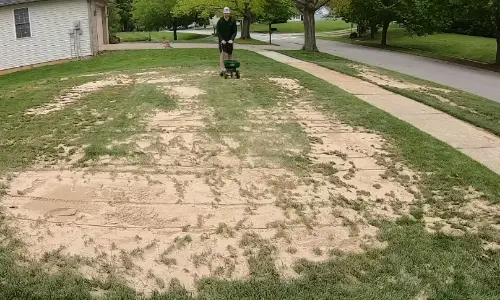
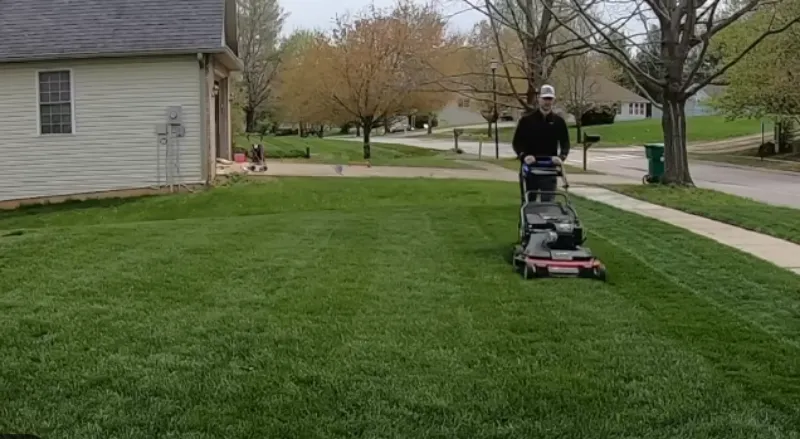
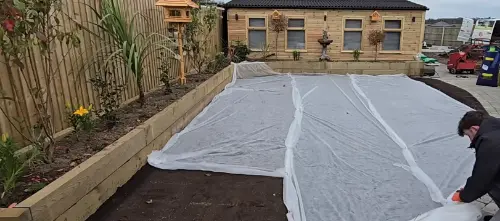
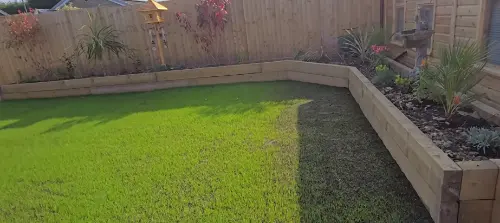
These are real programmes on real yards in the Montgomery area. Results take time and the right treatment sequence — not a single visit.
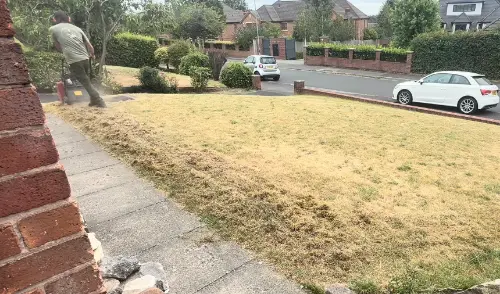
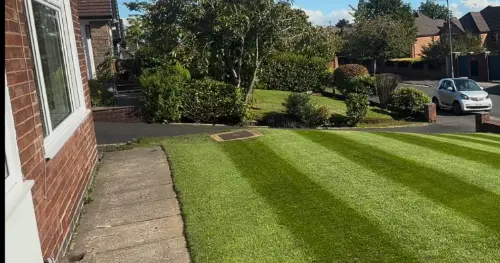
Bermuda Lawn Recovery from Brown Patch Damage
Crabgrass and Dollar Weed Elimination
Zoysia Annual Treatment Results Over 12 Months
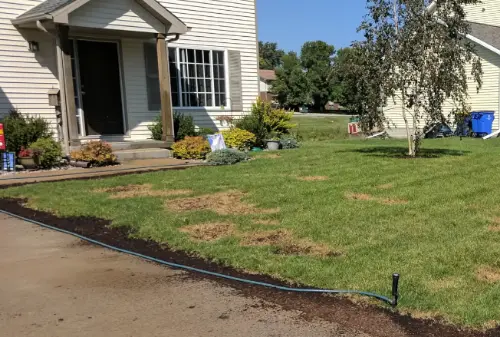
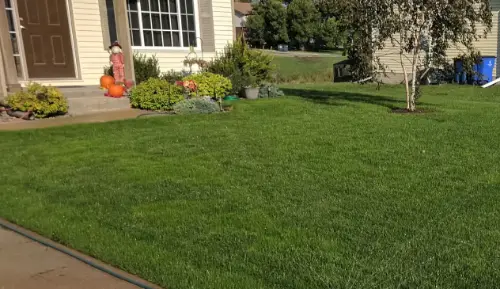
Centipede Decline Reversal After Over-Fertilization
Real project results from Montgomery-area properties. Client photos and names available on request. We document every lawn we treat.
What We’ve Learned Treating Montgomery Yards
What years of treating lawns across Montgomery County has taught us — and why generic advice fails here.
What Montgomery Lawns Need Right Now
October is the last call for fall pre-emergent in Montgomery. Soil temperatures are dropping toward 70°F, and once Poa annua — the light-green winter grass that invades dormant Bermuda and Zoysia — germinates, no treatment will stop it until spring. If you missed September, a late application now still protects you for the rest of the season. This is also the month to overseed thin spots with ryegrass if you want green color through winter, while most warm-season lawns are left to go dormant naturally.
Leaves are the other October job. A thick layer of oak and pine litter smothers dormant turf and invites fungus, so steady cleanup beats one big rake-out at the end of the season. Keep mowing until growth stops, dropping the blade slightly on the final cuts, and if your lawn has not had a fall feeding, a winterizer application now helps the roots store energy for a faster spring green-up.
Frequently Asked Questions About Lawn Care in Montgomery, Alabama
Lawn mowing in Montgomery typically runs $40–$75 per visit for a standard residential lot, depending on yard size, grass height, and service frequency. Biweekly customers generally pay $50–$65 per visit. A full annual treatment programme covering six visits — fertilization, weed control, pre-emergent, and disease prevention — runs $275–$450 per year for most Montgomery residential properties. Larger lots, commercial properties, or yards with significant weed or disease pressure will be at the higher end. We give specific pricing after a free property assessment — no guessing, no surprise invoices.
Montgomery yards are predominantly Bermuda grass (Cynodon dactylon), Zoysia grass (Zoysia japonica), Centipede grass (Eremochloa ophiuroides), and St. Augustine grass (Stenotaphrum secundatum). Bermuda is the most common — fine-bladed, aggressive spreader, goes tan and dormant in winter. Zoysia is denser and slower-growing, often found in premium neighbourhoods. Centipede is coarser, lighter green, common in older yards in western and southern Montgomery. St. Augustine has wide flat blades and better shade tolerance. If you’re not sure what you have, send us a photo or schedule a free assessment — grass type determines every aspect of the treatment programme.
In Montgomery, Alabama, the pre-emergent window for crabgrass control runs from late February to mid-March, when soil temperatures are approaching 55°F but before active green-up begins. Montgomery’s Zone 8a location means this window arrives two to three weeks earlier than most national lawn care calendars suggest. A second pre-emergent application in September controls Poa annua (annual bluegrass), which invades dormant warm-season lawns through the winter months. Missing either window means managing those weeds reactively all season — far harder than preventing them.
Brown circular patches on Bermuda grass in Montgomery during summer are most commonly caused by brown patch disease (Rhizoctonia solani). This fungal disease activates when nighttime temperatures stay above 60°F combined with high humidity — conditions that arrive in Montgomery as early as mid-May. A second cause is chinch bug damage, which produces irregular yellow patches that look like drought stress but don’t improve with watering. Third possibility is heat or drought stress, which causes even browning rather than circular patches. If you’re unsure, call us and describe what you’re seeing or send a photo.
During peak growing season (May through September), Bermuda grass in Montgomery should be mowed every 5–7 days, or weekly. Zoysia can go 7–10 days between mows. Centipede grows slower and can go 10–14 days. In spring and fall (March–April and October), growth slows and biweekly mowing is sufficient. During winter dormancy (November–February), mowing stops or is needed only for weed cleanup. Weekly service during summer is not upselling — it’s what the grass actually needs in Montgomery heat.
We service the full Montgomery metro area including Pike Road (36064), Prattville (36066/36067), Millbrook (36054), Wetumpka (36092), and Hope Hull (36043), along with all zip codes within Montgomery city (36104 through 36117). If you’re unsure whether your address falls within our service area, call (334) 719-0646 or enter your zip code in our estimate form and we’ll confirm immediately.
Centipede grass decline occurs when centipede grass (Eremochloa ophiuroides) is over-fertilized, exposed to soil pH imbalances, or treated with the same nitrogen rates used for Bermuda and Zoysia. Centipede is naturally a low-input grass — it thrives with minimal fertilization and declines when pushed with heavy nitrogen. In Montgomery, centipede lawns in the older neighbourhoods of western and southern parts of the county often sit on higher-pH soils influenced by the Black Belt prairie region. Iron deficiency (yellowing between leaf veins while veins stay green) is a common symptom. It is very common in the Montgomery market.
The products we apply — granular fertilizers, pre-emergent herbicides, and post-emergent weed controls — require a re-entry period before the treated area is safe for children and pets. Granular products are generally safe once dry, typically 24 hours after application or once the product has been watered in. Liquid applications require the treatment to fully dry before re-entry, usually 1–3 hours. We note the specific re-entry interval on the service record we leave after every visit. We use products registered for residential use in Alabama and follow all EPA and Alabama Department of Agriculture label requirements.
This is the most common complaint we hear from new customers across Montgomery. Our service process: before every visit, you receive a service reminder. After every visit, we leave a door hanger at your property — not emailed, not mailed two weeks later, but left that day — noting exactly what product was applied, what areas were treated, any issues we observed, and the date of your next scheduled service. We photograph the yard condition at each visit. If you were home and missed us or have any question about the service, you call (334) 719-0646 and reach us directly. No call centre. No support ticket. Us.
For Bermuda and Zoysia lawns in Montgomery (USDA Zone 8a), the fertilization window runs from May through August — when the grass is actively growing and soil temperatures are consistently above 65°F. Do not fertilize Bermuda or Zoysia before green-up in spring; the nitrogen feeds weeds, not the grass. Stop fertilizing by late August to avoid pushing tender new growth into the first frost. Centipede grass needs only one to two light applications per year — typically April and July — at significantly lower nitrogen rates than Bermuda. Over-fertilizing centipede is the most common mistake we correct in Montgomery yards, and the damage can take a full season to undo.
Lawn Care Services Across Greater Montgomery
We maintain regular service routes across Montgomery County. If your zip code is listed, your yard is on our route.
Not sure if we cover your street? Call or enter your zip code and we’ll confirm within minutes.
Confirm Your Service Area — (334) 719-0646Ready to Fix Your Montgomery Yard? Start with a Free Estimate.
No contract required to get started. No obligation to accept the quote. We’ll walk your property, identify exactly what it needs, and give you clear pricing before any work begins.
Whether your yard has been neglected for years, you’ve just moved into a new build in Pike Road, you’re tired of a lawn service that doesn’t show up, or you simply want a consistent reliable programme that handles everything — we’ll tell you honestly what your yard needs and what it costs.
You fill out the form or call (334) 719-0646
We schedule a free yard assessment — usually within 48 hours
We walk the property, identify grass type, soil conditions, existing problems
You receive a written estimate with exact pricing for every service
You decide whether to book. No pressure. No follow-up sales calls.
Serving East Montgomery · Pike Road · Eastchase · Prattville · Dalraida · Cloverdale · Bell Road · Millbrook · Wetumpka · Hope Hull · And all of Montgomery County